Choosing the right pallet for extremely heavy loads is important for safe storage, transportation, and material handling. Industries such as construction, manufacturing, warehousing, automotive production, and machinery supply often need pallets that can support heavy equipment, metal components, industrial materials, and large products.
The best pallet depends on the total load weight, how the weight is distributed, the handling equipment, and the storage conditions. Heavy-duty wooden pallets, reinforced plastic pallets, and steel pallets are common options for demanding industrial applications.
1. Heavy-Duty Wooden Pallets
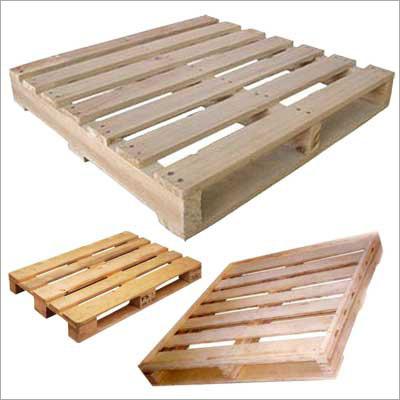
Heavy-duty wooden pallets are a popular choice for transporting and storing heavy industrial goods. They can be manufactured with thicker deck boards, stronger stringers, additional support blocks, and reinforced joints.
These design features help distribute weight across the pallet and improve its ability to withstand handling forces.
Advantages of heavy-duty wooden pallets:
- Strong construction for demanding industrial applications.
- Custom sizes and load capacities can be specified.
- Suitable for forklift and pallet-jack handling when designed accordingly.
- Individual components can sometimes be repaired or replaced.
- Often practical for transporting machinery, building materials, and heavy equipment.
However, not every wooden pallet is suitable for extremely heavy loads. Standard pallets and damaged or poorly repaired pallets may fail under excessive weight. The manufacturer’s rated capacity should always be checked before use.
2. Steel Pallets for Extremely Heavy Loads
Steel pallets are often suitable for applications requiring high structural strength, durability, and resistance to demanding industrial handling conditions.
They can be designed for heavy machinery, metal components, automotive parts, industrial equipment, and other dense products. Their construction can also be customized to accommodate unusual shapes or concentrated loads.
Advantages of steel pallets:
- High strength when properly engineered.
- Suitable for demanding industrial environments.
- Resistant to many forms of impact and rough handling.
- Can be manufactured in custom dimensions.
- May provide a long service life with appropriate maintenance.
Steel pallets can be heavier and more expensive than wooden alternatives. Corrosion protection may also be necessary in humid or corrosive environments. Their suitability depends on the design, welding quality, support arrangement, and rated load capacity.
For exceptionally heavy machinery or metal products, a custom-engineered steel pallet may be a suitable option.
3. Reinforced Plastic Pallets
Heavy-duty plastic pallets can also support substantial loads when manufactured for industrial applications. Some models include reinforced structures or metal reinforcements to improve their strength and rigidity.
These pallets are used in manufacturing, logistics, food processing, and other industries where consistent dimensions, easy cleaning, and resistance to moisture are important.
Their advantages include:
- Resistance to moisture and many common chemicals.
- Easy cleaning and maintenance.
- Consistent dimensions for repeated handling.
- No splinters or loose wooden boards.
- Availability in heavy-duty and rack-compatible designs.
However, standard plastic pallets should not automatically be considered suitable for extremely heavy goods. Their load capacity varies significantly by design, and prolonged loading or unsupported storage can cause deformation.
A reinforced industrial model should be selected only after confirming its rated capacity for the intended application.
4. Which Pallet Type Should You Choose?
The following comparison can help identify the most suitable option.
Pallet typeBest suited forMain considerationHeavy-duty wooden palletIndustrial materials and heavy goodsConstruction quality and conditionSteel palletVery heavy machinery and dense loadsWeight, cost, and corrosion protectionReinforced plastic palletRepeated handling and moisture-sensitive environmentsVerified load rating and support conditionsStandard wooden palletGeneral warehouse goodsMay not provide sufficient capacity for extremely heavy loadsFor exceptionally heavy loads, steel pallets and custom-built heavy-duty wooden pallets are worth considering. Reinforced plastic pallets may also be suitable when the selected model has a verified capacity for the required conditions.
There is no single best material for every application.
5. Understand the Three Pallet Load Capacities
Before selecting a pallet, it is essential to understand how load capacity is measured. A pallet may have different ratings depending on how it is supported.
Static load capacity: The weight a pallet can support while resting on a flat, fully supporting surface.
Dynamic load capacity: The weight a pallet can safely carry while being lifted and moved using a forklift or pallet jack.
Racking load capacity: The weight a pallet can support when positioned across warehouse rack beams without continuous support underneath.
These ratings are not interchangeable. A pallet that can support a very heavy load on the warehouse floor may have a much lower safe capacity when moved or stored on rack beams. <Cite refs={[“turn920036search1″,”turn920036search6”]}/>
For this reason, buyers should request all relevant ratings rather than relying on a single maximum-weight figure.
6. Factors to Consider When Selecting a Heavy-Duty Pallet
Several factors determine whether a pallet is suitable for an extremely heavy load.
Total Load Weight
Calculate the combined weight of the product, packaging, and any other materials placed on the pallet. Select a pallet with a documented rating appropriate for the intended operation.
Weight Distribution
A uniformly distributed load places different stresses on a pallet than a heavy machine resting on a small area. Concentrated loads may require additional supports, reinforced deck boards, or a specially designed pallet.
Handling Equipment
Consider whether the pallet will be lifted using a forklift, pallet jack, conveyor, or another handling system. Fork-entry dimensions and clearance must match the equipment.
Storage Conditions
For warehouse racking, check the pallet’s rated racking capacity and the rack manufacturer’s requirements. Do not use its static capacity as a substitute.
Environmental Conditions
Moisture, temperature, chemicals, and outdoor exposure can affect pallet performance. Steel may require corrosion protection, while wooden pallets need suitable storage and maintenance.
Reuse and Condition
Used pallets should be inspected for cracks, broken boards, loose fasteners, corrosion, deformation, and previous repairs. For extremely heavy or safety-critical loads, a new pallet with documented specifications may be preferable.
7. Are Custom Pallets Better for Extremely Heavy Loads?
Custom pallets can be useful when standard designs do not meet the load requirements. They can be manufactured to fit the product’s dimensions, weight distribution, forklift-entry requirements, and storage arrangement.
For example, a pallet designed for heavy machinery may require a reinforced base, additional support members, or steel construction. A pallet intended for dense metal components may need stronger deck boards and carefully positioned supports.
The design should be based on the actual load and operating conditions, with suitable engineering calculations or testing where necessary.
Conclusion
The best pallet for extremely heavy loads depends on the weight, product dimensions, handling method, and storage conditions. Heavy-duty wooden pallets can provide a practical solution for many industrial applications, while steel pallets are worth considering for exceptionally heavy machinery and dense materials. Reinforced plastic pallets may be appropriate where their documented load ratings meet the requirements.
Before purchasing, verify the pallet’s static, dynamic, and racking capacities as applicable. Selecting a pallet based on its actual operating conditions helps protect products, improve handling safety, and reduce the risk of pallet failure.
Frequently Asked Questions
Which pallet is strongest for heavy machinery?
A properly engineered steel pallet or a custom heavy-duty wooden pallet may be suitable. The final choice depends on the machine’s weight, dimensions, and support requirements.
Can wooden pallets carry extremely heavy loads?
Yes, specially designed heavy-duty wooden pallets can carry substantial loads. Their capacity depends on the timber, dimensions, support structure, fasteners, and loading conditions.
Are steel pallets stronger than wooden pallets?
Steel pallets can provide greater structural strength for certain demanding applications, but strength depends on the specific design. A properly engineered wooden pallet may be sufficient for many heavy loads.
Can plastic pallets be used for industrial machinery?
Yes, some reinforced plastic pallets are designed for industrial loads. However, their rated capacity must be verified for lifting, storage, and racking conditions.
How do I know the maximum weight a pallet can carry?
Check the manufacturer’s load ratings and confirm whether they apply to static storage, dynamic handling, or racking. If the load is unusually heavy or concentrated, request a technical assessment of the specific pallet design.