
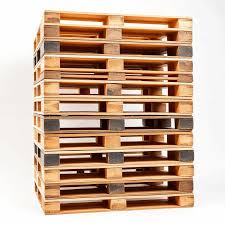
Introduction
Choosing a pallet is not simply a matter of finding the largest available platform. The wrong pallet size can lead to product overhang, unstable loads, wasted space, higher shipping costs, handling problems, and increased product damage risk. The correct pallet should support the product while fitting the company’s shipping and warehouse system—not just be a platform that happens to be available.
Why Pallet Size Matters
Pallet dimensions affect nearly every aspect of logistics. Product stability depends on the load being fully supported. Warehouse storage is determined by rack dimensions and floor space. Truck and container space utilization directly impacts shipping costs. Forklift handling, shipping efficiency, packaging, and load security are all influenced by the pallet you choose.
The right pallet size helps you avoid overhang, maximize truck space, and get a more precise freight quote. When your pallet fits correctly, your shipment moves more efficiently and you’re less likely to run into extra fees or delays .
What Is the Standard Pallet Size?
The 48 × 40-inch pallet is the most common standard pallet size in the United States. Popularized by the Grocery Manufacturers Association (GMA), it is widely adopted in North America, particularly in the food and beverage industries, due to its compatibility with standard door and truck dimensions .
However, there is no single pallet size suitable for every product. Businesses shipping internationally should be aware that other regions use different standards. For example, the UK standard pallet is 1,200 × 1,000 mm, while the European Euro pallet is 1,200 × 800 mm .
How to Determine the Right Pallet Size
Step 1: Measure Your Product
Measure the product in its actual shipping packaging rather than measuring the bare product. Record the length, width, and height of the unitized load—not just the item itself .
Step 2: Determine the Total Weight
Total shipment weight includes product weight, packaging weight, and pallet weight. Pallet capacity should be appropriate for the complete load. A standard GMA pallet can support up to 4,600 lbs, but always verify load capacity with your pallet supplier .
Step 3: Consider How the Product Will Be Arranged
Different products require different arrangements: single-item loads, multiple boxes, layered products, or irregular shapes all influence the ideal pallet dimensions. Think about how the load will be stacked and secured.
Step 4: Check for Overhang
Product should not extend beyond the pallet deck. Even small overhang can lead to damage, delays, or extra fees . Whenever possible, keep no overhang and minimal empty deck area, maintaining enough clearance for stretch wrap and handling but avoiding large voids .
Step 5: Consider Warehouse Requirements
Rack dimensions, floor storage, forklift access, pallet jacks, automated systems, and storage aisle configuration all affect pallet choice. A pallet that fits the product may still be unsuitable for your warehouse. Confirm compatibility with racking beam lengths and allowable overhang .
Step 6: Consider Transportation
Pallet dimensions interact with trucks, trailers, shipping containers, and air freight. Efficient pallet dimensions help businesses use available cargo space more effectively. For LTL shipping, carriers price the final pallet size and dimensions—not just what’s inside the stack .
When Should You Consider a Custom Pallet?
Custom pallets may make sense when the product is unusually large, heavy, or irregularly shaped. If standard pallets create excessive overhang, the product requires special support, or standard dimensions cause wasted shipping space, custom pallets can eliminate inefficiencies .
A standard 48×40 pallet works well for many products, but it’s still a compromise. If your loads are longer than 48 inches, narrower than 40 inches, tall and top-heavy, or irregularly shaped, standard pallets may be causing problems you’ve simply accepted as normal .
Final Checklist for Choosing a Pallet
- Product dimensions (packaged)
- Total weight
- Load arrangement
- Overhang requirements
- Warehouse compatibility
- Handling equipment
- Transportation method
- Storage system
- Standard vs custom design
Conclusion
The right pallet size is the one that safely supports the packaged product while working efficiently with your warehouse, handling, transportation, and storage requirements. There is no universal “best” pallet size—only the one that fits your specific product and logistics system. Before committing to a large order, test the selected pallet with the actual product and confirm with a pallet manufacturer that your dimensions align with your supply chain needs.

1 Comment
landscape galaxy
Choosing the right pallet size really depends on your product’s dimensions, weight, and storage requirements. Taking these factors into account can help improve handling and make better use of available space. For more ideas on creating functional and attractive outdoor spaces, you can also check out https://www.landscapegalaxy.com